Lion from Zion - Ethiopian Christians

There is no doubt that one of my favorite subjects in Jerusalem photography is the Ethiopian people, especially the vibrant and deeply rooted Christian community, which has a fascinating tapestry of rich customs and ceremonies that are both unique and captivating. The Ethiopian community in Jerusalem is a remarkable one, with a history that stretches back centuries, and their traditions are steeped in spirituality and cultural significance. Over the years, I have taken the opportunity to immerse myself in their world, reaching out to and forming friendships with many individuals from this lovely and humble community.
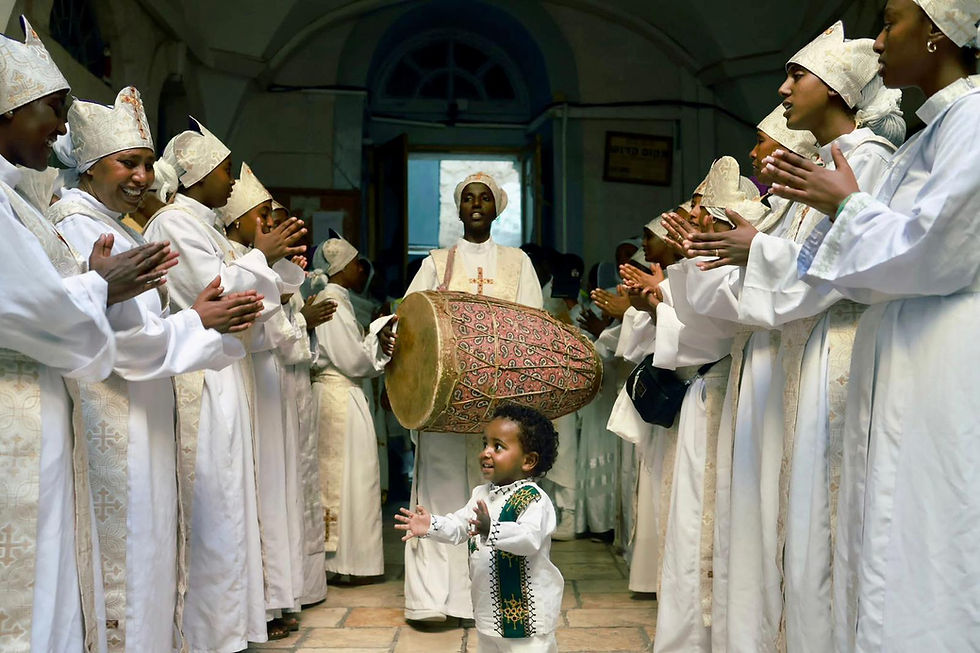
Through my lens, I have been fortunate to capture the essence of their daily lives, their rituals, and the profound sense of faith that permeates their existence. The Ethiopian Orthodox Church, with its stunning architecture and vibrant religious practices, serves as a focal point for many of their communal gatherings. The ceremonies, often filled with singing, dancing, and
colorful attire, are a visual feast that tells
tories of their heritage, beliefs, and the resilience of their spirit.
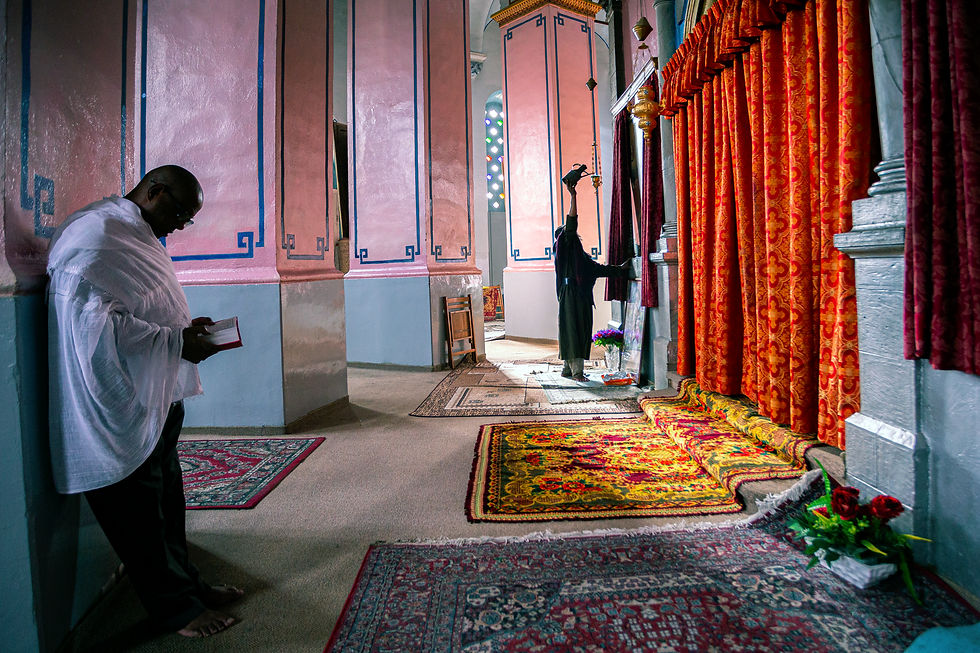
Interacting with the community, I've found that communication often transcends language barriers. Our exchanges are enriched by broken Hebrew, smiles, and gestures that convey warmth and understanding.
I teach Hebrew lessons to some monks and often discover similarities between the two Semitic languages, Ge'ez (Classical Ethiopic) and Hebrew.
The Ethiopian people in Jerusalem showcase remarkable strength in maintaining their traditions while adapting to urban life. I am very happy to share through my lens their vibrant culture. Each photograph captures their stories, moments of joy, devotion, and community.

My exploration of the Ethiopians through photography is about celebrating their identity, understanding their struggles, and honoring their existence in complex Jerusalem. Each encounter enriches my perspective, making every photograph a cherished memory and tribute to their legacy.
Atop the Church of the Holy Sepulchre is an Ethiopian monastery, a serene enclave that highlights the rich tapestry of Christian heritage and Ethiopian Orthodox Christianity. The monastery sits on a roof terrace with a striking stone dome above Helena's Chapel, where the original cross of Jesus was discovered in the fourth century, a pivotal moment in Christian history.
The monks call their home "Deir al-Sultan," meaning "Monastery of the King," in tribute to King Solomon, considered the ancestor of the Ethiopian royal dynasty. This heritage is symbolized by the Lion of Judah, a key emblem in Ethiopian culture. The story of King Solomon and the Queen of Sheba is central to Ethiopian history, with their son Menelik believed to have brought the Ark of the Covenant to Ethiopia. Christianity's roots in Ethiopia date back to the fourth century, blending Jewish customs and creating a distinct tradition. In the 19th century, Ethiopian culture in Jerusalem grew with new buildings, including a consulate and church, and in 1936, Emperor Haile Selassie lived in Jerusalem, deepening ties between Ethiopia and the city. The monks live communally in small huts, facing challenges due to ownership disputes with Coptic neighbors, preventing renovations. An ancient olive tree in the monastery's courtyard symbolizes faith and sacrifice, believed to be the bush where the ram's horns were caught during Isaac's binding. Visitors can enter the Church of the Holy Sepulchre through two Ethiopian chapels, highlighting ties with the Coptic community. The upper "Chapel of the Four Beasts" features a painting of the Queen of Sheba's visit to Solomon, depicting figures in traditional attire. The lower "Chapel of the Archangel Michael" is another key worship space, contributing to the monks' spiritual life and identity.

The Ethiopian Orthodox Church, a central institution in Ethiopian Christianity, was the state church until the late 20th century. Ethiopia is one of the oldest Christian nations, alongside Armenia, and its church is one of the few African churches that predates European colonialism. The church also has places of worship in Jerusalem.
Deir es-Sultan, an Oriental Orthodox monastery on the roof of the Chapel of St. Helena in the Church of the Holy Sepulchre, is subject to the status quo, a longstanding agreement among religious communities. Its ownership is disputed between the Coptic Orthodox Church and the Ethiopian Orthodox Church.
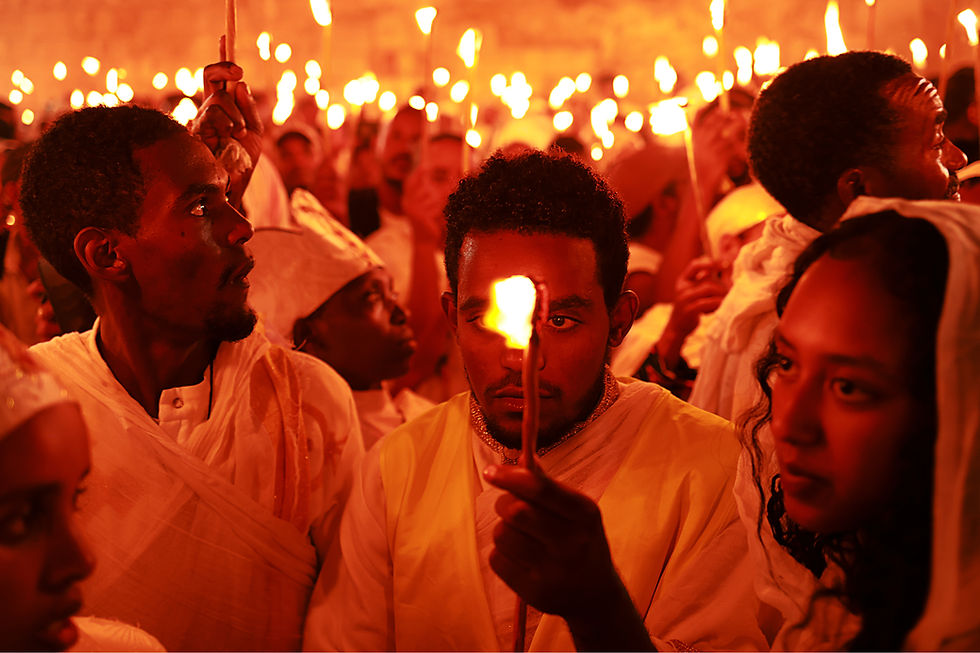
The Ethiopian Orthodox community celebrates Meskel, commemorating the discovery of the True Cross by Saint Helena. Held around the Church of the Holy Sepulchre on September 27th (or October 7th Gregorian), it features rituals, traditional songs, and gatherings. Central to Meskel is the "Demera," a bonfire symbolizing the True Cross's discovery. The celebration includes hymns, prayers, processions, and communal meals, reinforcing Ethiopian Orthodox identity and emphasizing the significance of the cross.
Another celebration that should not be missed is the Holy Week of Easter, a significant time for Christians around the world. This week is filled with various observances and rituals that commemorate the passion, death, and resurrection of Jesus Christ. Among these observances, Palm Sunday stands out as my personal favorite.

On this day, believers participate in a beautiful and symbolic tradition where they carry palm branches, specifically those made from the papyrus plant, which is native to regions around the Nile River. These branches are not just ordinary foliage; they hold deep historical and spiritual significance. The papyrus plant, with its roots tracing back to ancient Egypt and Ethiopia, symbolizes victory and triumph, reflecting the joyous entry of Jesus into Jerusalem.
This day marks the beginning of a profound week of reflection and preparation for the resurrection celebration that follows on Easter Sunday. It serves as a reminder of the humility and sacrifice of Jesus, who, despite being hailed as a king, rode into Jerusalem on a humble donkey. The contrast of joy and impending sorrow is palpable, as believers prepare their hearts for the events that will unfold in the days to come. the peak of Easter is of course Palm Saturday and Easter Sunday.

Ethiopia's independence from European imperialism instills deep national pride and a unique cultural heritage rooted in its rich history. As one of the few African nations to avoid colonization, Ethiopians cherish their identity, tracing back to ancient civilizations like the Kingdom of Aksum, known for its monumental obelisks and trade connections. Ethiopia is also recognized as the cradle of humanity, adding to its historical significance.
The country's culture is diverse, with over 80 ethnic groups and multiple languages, including Amharic, Oromo, Tigrinya, and Somali. This diversity enriches Ethiopia's cultural mosaic, evident in its music, dance, and art. Religiously, Ethiopia is notable for adopting Christianity early, with the Ethiopian Orthodox Tewahedo Church playing a central role. Religious festivals like Timkat and Meskel highlight the nation's spiritual roots.
Ethiopian cuisine, centered around injera and spicy stews, reflects agricultural diversity and the importance of hospitality. National symbols, such as the flag and the Lion of Judah, emphasize Ethiopia's sovereignty and strength. In conclusion, Ethiopia's independence and rich heritage foster a strong sense of pride and unity, driving its pursuit of progress on the global stage.
for more recent works' please follow IG: https://www.instagram.com/simon_beni_


Comments